1526 South Levick Street Moscow, ID 83843


Periodontal Disease in Moscow, ID: Symptoms, Stages, and Treatment Options
When most people think about oral health, they think about cavities. But there’s another condition that affects nearly half of adults — and it often develops quietly. We’re talking about periodontal disease, also known as gum disease.
If you live in Moscow, ID and have noticed bleeding gums, persistent bad breath, or gum sensitivity, it might be more than just brushing too hard. At Palouse View Dental, patients often ask how to recognize gum disease early — and what can be done to treat it before it leads to tooth loss.
Let’s walk through what periodontal disease is, its symptoms, the different stages, and the treatment options available right here in Moscow.
What Is Periodontal Disease?
Periodontal disease is a chronic inflammatory condition that affects the gums and the bone supporting your teeth. It begins with plaque buildup along the gumline. If not removed properly through brushing, flossing, and professional cleanings, plaque hardens into tartar — leading to irritation and infection.
Over time, untreated gum disease can cause:
- Gum recession
- Bone loss
- Loose teeth
- Tooth loss
The tricky part? It often progresses without severe pain in the early stages.
Common Symptoms of Gum Disease
One of the biggest misconceptions is that gum disease is always painful. In reality, many patients in Moscow don’t realize they have it until symptoms become more advanced.
Here are warning signs to watch for:
- Gums that bleed when brushing or flossing
- Red, swollen, or tender gums
- Persistent bad breath
- Receding gums (teeth look longer)
- Pus between teeth and gums
- Loose or shifting teeth
- Changes in bite alignment
If you’re noticing even one of these symptoms, it’s worth scheduling an evaluation.
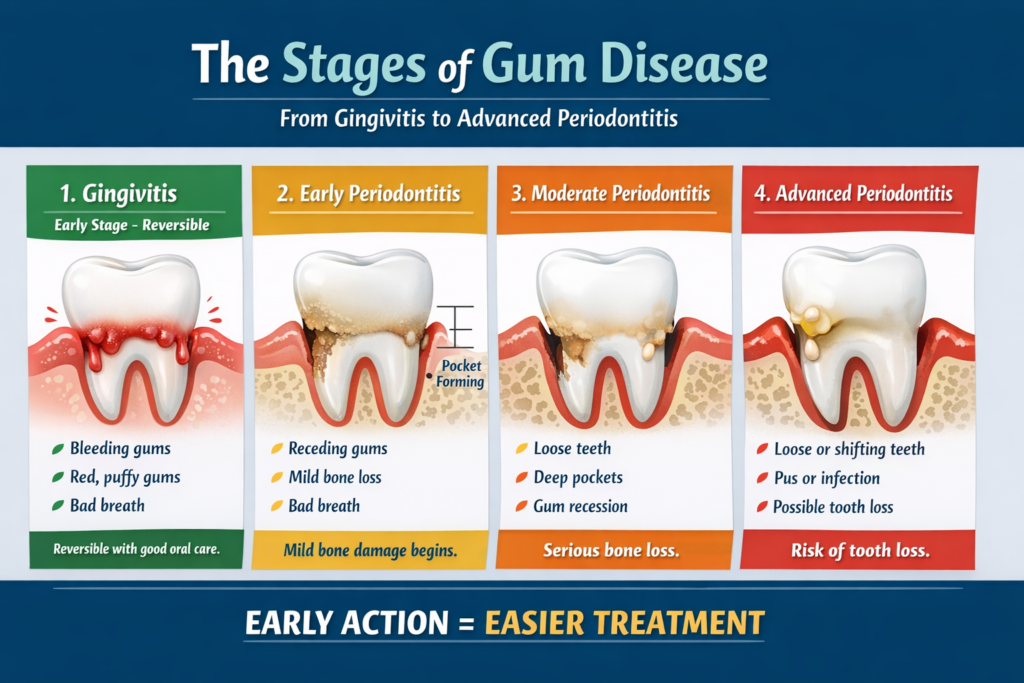
The Stages of Periodontal Disease
Understanding the stages helps explain why early treatment matters so much.
1. Gingivitis (Early Stage)
This is the earliest and most reversible stage.
What happens:
- Plaque builds up along the gumline
- Gums become inflamed and may bleed
The good news? Gingivitis can often be reversed with professional cleaning and improved at-home care.
2. Early Periodontitis
If gingivitis isn’t treated, infection begins affecting the bone supporting your teeth.
What happens:
- Gum pockets begin forming
- Mild bone loss may start
- Bleeding and inflammation persist
At this stage, more intensive cleaning procedures are typically needed.
3. Moderate Periodontitis
Now the infection is deeper and more damaging.
What happens:
- Increased bone loss
- Deeper periodontal pockets
- Possible tooth mobility
- More noticeable gum recession
Treatment becomes more involved to prevent further progression.
4. Advanced Periodontitis
This is the most severe stage.
What happens:
- Significant bone destruction
- Loose teeth
- Pain when chewing
- Possible tooth loss
At this point, surgical or advanced periodontal therapy may be necessary.
Why Is Gum Disease So Common in Adults?
Several factors contribute to higher rates of periodontal disease:
- Smoking or tobacco use
- Diabetes
- Poor oral hygiene
- Genetics
- Stress
- Hormonal changes
In a busy college town like Moscow — home to students, professionals, and families — routines can get hectic. Skipping flossing or delaying cleanings adds up over time.
Treatment Options for Periodontal Disease in Moscow, ID
The right treatment depends on the stage of the disease.
Professional Dental Cleaning
For gingivitis, a thorough cleaning removes plaque and tartar buildup above and below the gumline.
Scaling and Root Planing (Deep Cleaning)
This non-surgical treatment is often recommended for early to moderate periodontitis.
Scaling removes tartar below the gumline.
Root planing smooths the tooth roots to help gums reattach.
This procedure reduces pocket depth and controls infection.
Antibiotic Therapy
In some cases, localized antibiotics may be placed in gum pockets to reduce bacteria.
Periodontal Maintenance
Once gum disease is diagnosed, maintenance visits are typically scheduled every 3–4 months instead of the standard six months. This helps prevent recurrence.
Surgical Treatment
For advanced cases, procedures like flap surgery or bone grafting may be recommended to restore damaged structures.
Can Periodontal Disease Be Reversed?
Gingivitis — yes.
Periodontitis — not fully reversed, but it can absolutely be managed and stabilized.
Early intervention is key. The sooner you address symptoms, the more conservative the treatment can be.
How to Prevent Gum Disease
Prevention is simpler than treatment. Here’s what helps:
- Brush twice daily with fluoride toothpaste
- Floss once daily
- Use an antibacterial mouthwash
- Schedule regular cleanings
- Avoid smoking
- Manage chronic conditions like diabetes
Consistency makes all the difference.
Why Choose Palouse View Dental for Periodontal Care?
Gum disease requires a thoughtful, personalized approach. At Palouse View Dental, patients receive:
- Comprehensive periodontal evaluations
- Advanced diagnostic tools
- Customized treatment plans
- Preventive education
- Supportive, judgment-free care
Oral health isn’t just about teeth — it’s about protecting the foundation that holds them in place.
Final Thoughts
Periodontal disease is common — but it’s also manageable, especially when caught early. If you’re experiencing bleeding gums, bad breath, or gum recession in Moscow, ID, don’t ignore the signs.
Healthy gums mean a healthier smile — and a healthier you.
If it’s been a while since your last dental checkup, now is a great time to schedule an evaluation and protect your smile for years to come.
FAQs
1. How common is periodontal disease in Moscow, ID?
Periodontal disease is common nationwide, and Moscow is no exception. Adults over 30 are particularly at risk. Regular checkups at Palouse View Dental help detect it early.
2. How often should I get cleanings if I have gum disease?
Patients with periodontal disease are usually placed on a 3–4 month maintenance schedule instead of every six months.
3. Is scaling and root planing painful?
Most patients report mild discomfort, but local anaesthesia is used to ensure comfort during treatment.
4. Does dental insurance cover periodontal treatment in Moscow?
Many dental insurance plans provide partial coverage for deep cleanings and periodontal therapy. It’s best to check your specific benefits.
5. Can gum disease affect overall health?
Yes. Research links periodontal disease to heart disease, diabetes complications, and other systemic conditions. Treating gum disease supports overall health.